

Finding the right hair volume products is not about a single miracle bottle. It’s about decoding the specific needs of your hair type, texture, and lifestyle to build a personalized, effective regimen.
After a decade as a stylist specializing in fine and thinning hair, I have seen every volumizing trend come and go. From the bump-its of the early 2000s to the teasing combs that caused more breakage than body, the quest for lift is universal. But the biggest mistake I see isn’t a lack of effort; it’s a mismatch of chemistry. I have watched countless clients with fine, fragile strands try to use heavy creams meant for thick, curly hair. The result? A greasy, flat disappointment that looks worse than when they started.
True volume isn’t one-size-fits-all. A root lifter that works wonders for a blowout on straight hair might turn wavy hair into a frizzy nightmare. To get a lasting body, we have to move beyond generic volumizing labels.
This guide is your definitive decoder. We are going to match your specific hair profile, whether fine, curly, thinning, or short, with the precise product category and application technique required to get the lift you want. Here is how to navigate the aisle of best volumizing hair products and finally build a routine that holds up.
The Science of Lift: How Volume Products Actually Work
Before you buy another bottle, you need to understand what is happening inside it. Volumizing technology generally relies on three things: polymers, proteins, and humectants. Think of polymers as invisible scaffolding that props up the hair strand away from the scalp. Proteins strengthen the hair shaft to make it stiffer (and less floppy), while humectants draw moisture in to physically swell the strand’s diameter.
However, different delivery systems work for different needs. Here are the five archetypes you need to know:
Root Lifter and Volumizing Spray
Mechanism: These sprays usually contain fixative polymers that dry quickly and are rigid. They provide structural support specifically at the base of the hair shaft.
Best For: Creating instant, targeted lift at the crown or where the hair parts.
Volumizing Mousse
Mechanism: Mousse is an aerated foam that coats the entire hair strand with resins. As it dries (usually with heat), it expands slightly to create space between hairs.
Best For: All-over body, big hair looks, and essential prep for a round-brush blowout.
Texturizing Powder and Dry Shampoo
Mechanism: These hair volume products use starches (like rice or tapioca) or silica to absorb oils that weigh hair down. They also add grit or friction, allowing hair strands to stack on top of each other rather than slipping flat.
Best For: Second-day volume, reviving limp styles, and combating oily roots.
Thickening Serum and Treatment
Mechanism: Unlike stylers that sit on top, these treatments often use ingredients like panthenol (Vitamin B5) or wheat proteins to penetrate the cuticle and plump the hair from the inside out.
Best For: Making individual ponytail strands feel thicker and increasing overall density perception.
Volumizing Shampoo and Conditioner
Mechanism: These are formulated to be weightless. They use lighter moisturizing agents that rinse clean, ensuring no residue is left behind to drag the hair down.
Best For: The foundational step for anyone with fine hair; if your canvas is heavy, no styling product can save it.
The Diagnosis: Match Your Hair Profile to the Perfect Product
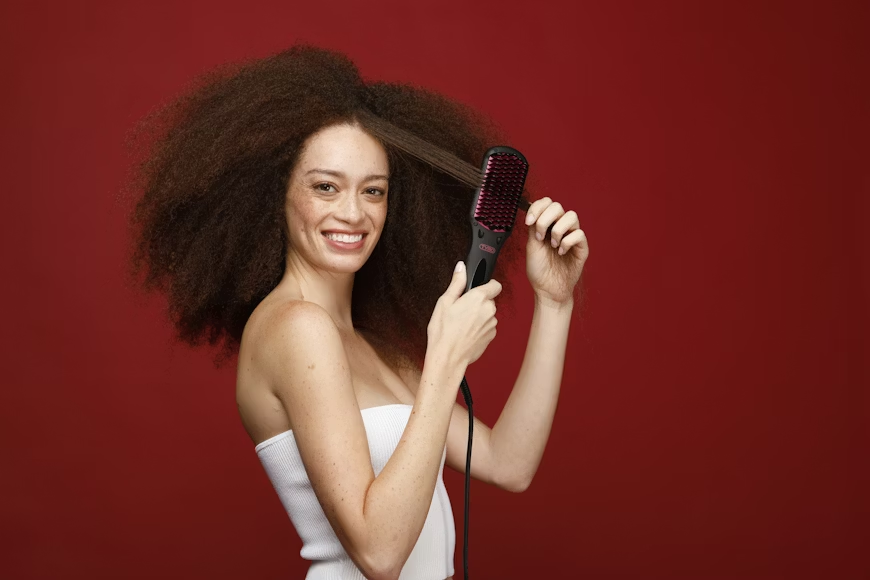
This is where most people go wrong. They buy a product that is highly rated but wrong for their biology. Identify your profile below to find your tailored solution.
Profile A: Fine, Flat, and Oily
Your hair is naturally straight or slightly wavy, and the individual strands are thin (like silk thread). You likely have to wash it every day because sebum travels down the hair shaft quickly, weighing it down by noon.
- The Strategy: Focus on clean volume. You need grit, not moisture.
- The Hero Product: Texturizing Powders and Volumizing Mousse.
- What to Avoid: Heavy oils, silicone-based smoothing serums, and repair shampoos (which are often too heavy).
- Application Tip: Look for the best volumizing mousse for thin hair that is alcohol-free to avoid drying out your ends, but apply it only from mid-lengths to ends. Use a texturizing powder at the root of dry hair.
Profile B: Fine, Flat, and Thinning
This profile is common during post-partum recovery, menopause, or periods of high stress. You aren’t just dealing with thin strands; you are dealing with a lack of density. You can see more of your scalp than you used to.
- The Strategy: Gentle care and scalp health. You cannot style your way out of hair loss, but you can cosmeticize it while treating the root cause.
- The Hero Product: Thickening Serums and Root Lifters.
- What to Avoid: Harsh teasing or sticky sprays that glue hairs together (which reveals more scalp).
- Application Tip: Look for hair growth and volume products containing ingredients like caffeine, peppermint, or peptides. Apply a lightweight root lift spray to damp hair and blow-dry with a concentrator nozzle to direct hair up and over thinning spots.
Profile C: Curly or Wavy Hair Lacking Volume

You have texture, but it gets weighed down easily, leading to triangle hair (flat on top, poofy on the bottom).
- The Strategy: Weightless definition. You need to encourage the curl pattern to spring up at the root.
- The Hero Product: Volumizing Foam and Diffusers.
- What to Avoid: Heavy butters and thick creams near the scalp. Traditional crunchy mousses can also be too dry.
- Application Tip: Search for hair products for volume and curls specifically. Apply a volumizing foam to soaking wet hair at the roots. Flip your head upside down and diffuse dry to lock in the lift before gravity takes over.
Profile D: Men’s Thinning Hair (Short Styles)
Short hair needs different mechanics. You want the hair to look dense and matte, not shiny (which reflects light off the scalp) or fluffy.
- The Strategy: Texture and matte finish.
- The Hero Product: Clay Pomades and Fiber Sprays.
- What to Avoid: Wet-look gels or heavy waxes that clump hairs together, making thinning areas look more obvious.
- Application Tip: For hair volume products for men, look for fiber or clay on the label. Rub a small amount between palms until warm, then work it through dry hair in a messy motion to create separation and height.
The Pro Application Handbook: Techniques > Products
You can own the most expensive volumizing hair spray for thin hair on the market, but if you apply it incorrectly, it stays in the bottle. Here are the techniques stylists use to guarantee lift.
1. The Root Lift Blow-Dry
Gravity is your enemy while your hair is wet.
- Apply your root lifter to damp (not soaking) hair. Part your hair into sections.
- Use a round brush or your fingers to lift a section of hair straight up, 90 degrees from the scalp.
- Aim your blow dryer nozzle directly at the roots from below.
- Crucial Step: Hit the cool shot button for 10 seconds while the hair is still lifted. Heat molds the hair; cool air sets the shape.
2. Strategic Mousse Application
Don’t slap a ball of mousse on top of your head.
- Dispense a golf-ball-sized amount into your palm.
- Dip a wide-tooth comb into the foam.
- Comb through damp hair from roots to ends. This ensures every single strand gets coated evenly for a uniform body.
3. The Layering Principle for Extreme Hold
If your hair falls flat in an hour, you need to layer your textures.
- Base Layer: Volumizing Mousse on damp hair (builds the foundation).
- Finish Layer: Texturizing Spray or Powder on dry hair (adds the grip).
- Lock Layer: A light-hold hairspray.
This sandwich method creates a structure that is much harder for gravity to collapse.
The 2025 Edit: Tried & Tested by a Pro
There are thousands of options on the shelf. Based on performance, ingredients, and client feedback, here are the standouts for this year across the 5 archetypes.
1. Living Proof Full Dry Volume & Texture Spray
Category: Texturizing Spray
Best For: Profile A (Fine/Oily)
Pro: It offers significant grit without the white powdery residue of dry shampoo. It actually increases the space between hair fibers.
Con: It can feel slightly dirty to the touch if you overuse it.
Stylist Tip: Shake the can vigorously before every single spray. Lift a section of hair and spray it into the underlayers, not just the top.
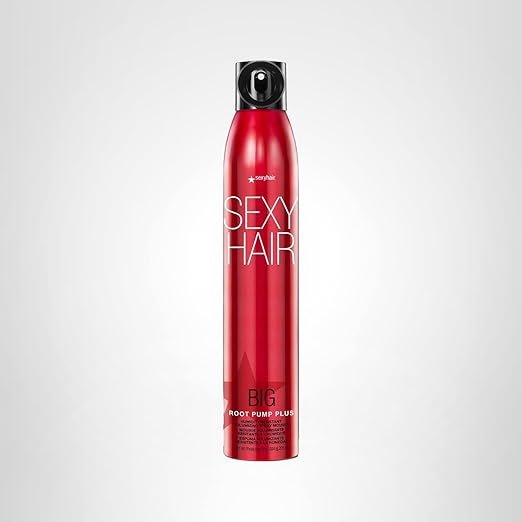
2. Color Wow Xtra Large Bombshell Volumizer
Category: Volumizing Mousse
Best For: Profile B (Fine/Thinning) and Profile C (Curly)
Pro: It is alcohol-free and doesn’t use salt or resins that dry out the hair. It leaves hair feeling soft, not crunchy, making it safe for fragile, thinning hair.
Con: It provides a soft volume, so if you want a stiff, 80s-style hold, this isn’t it.
Stylist Tip: Apply liberally. Since it’s not sticky, you can use more product than you think to maximize the plumping effect.
3. Bumble and bumble Thickening Spray
Category: Root Lifter / Pre-Styler
Best For: Profile A and D (Short styles)
Pro: A classic for a reason. It builds a solid foundation for heat styling and gives great control.
Con: It must be heat-activated. If you air-dry with this, it won’t do much.
Stylist Tip: Use this as a primer before your mousse for double the impact on special occasions.
Building Your Volume Regimen
So, before you buy another product, do what I had Sarah do: stand in front of the mirror and diagnose first. Are you Fine & Oily or Fine & Thinning? Pick the one hero product from your profile above. Master the technique that goes with it. That single, correct product, used right, will do more than the seven wrong ones in your cabinet. Bring this guide to your stylist. It’s the cheat code we use every day to give you the hair that finally holds up.