

Cutting curly hair can feel intimidating—especially when one wrong snip can change your entire shape. This guide is not about choosing trendy styles or salon inspiration. It’s about how to cut curly hair correctly, whether you’re maintaining your shape at home or trying to understand what a stylist should be doing.
By learning the right techniques, tools, and timing, you can avoid common mistakes like uneven shrinkage, triangle shapes, and over-cutting—while protecting the health and definition of your curls.
Why Cutting Curly Hair Is Different
Curly hair is not straight hair with bends; it’s a unique structure that grows in three-dimensional spirals and requires a sculptor’s touch. Each curl has its own personality, growing at different rates and directions, which is why standard cutting techniques often fail. Cutting curly hair is a unique skill that blends significant artistry and scientific understanding, demanding a stylist who respects its distinctive texture and volume.
The goal of a true curly cut is to shape the hair in its natural, dry state, allowing for shrinkage, bounce, and the way curls naturally live together in families. Ignoring this principle by cutting wet hair as if it were straight or applying uniform layers is a primary cause of bad haircuts, leading to unevenness and a loss of shape. The most transformative cuts are performed by those who see themselves as curl whisperers, dedicated to enhancing what nature gave you.
Should You Cut Curly Hair Wet or Dry?
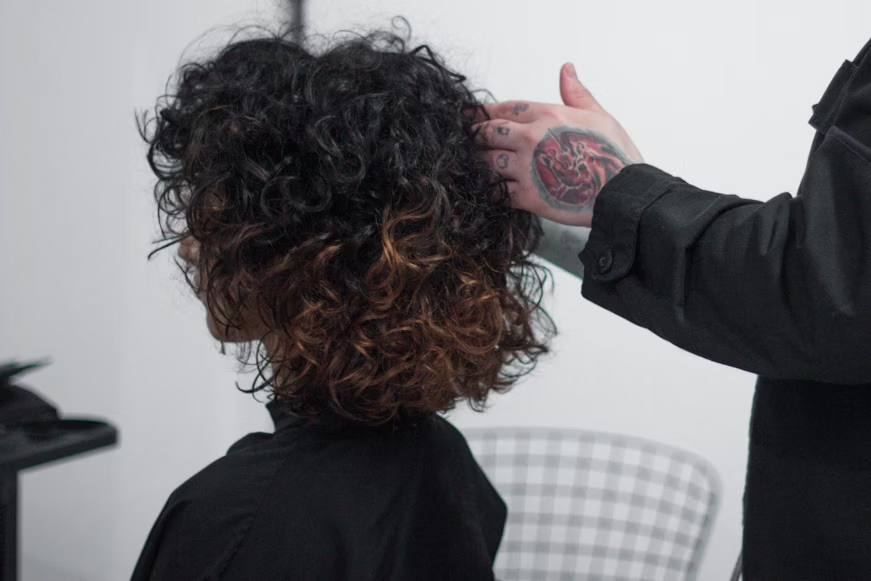
Choosing a cutting method is the first critical decision. While both have merits, each serves a different purpose and ideal hair type. Here’s a breakdown to guide your choice:
| Cutting Method | How It Works | Best For |
| Dry Cutting | Hair is styled, dried, and cut curl-by-curl in its natural state. | Most home trims, anyone seeking shape based on how hair naturally falls, addressing shrinkage, and creating volume. Techniques: DevaCut, Rezo Cut. |
| Damp/Wet Cutting | Hair is cut while damp or wet, often with tension, before being styled and dried. | Tight, uniform curl patterns, precision blunt cuts, and creating controlled, geometric shapes. Technique: Ouidad’s Carve and Slice. |
| Combo Cutting (The Gold Standard) | A hybrid approach starting with a dry cut for shape, followed by a wet cut for detail and cleanup. | All hair types achieve maximum shape, balance, and definition. This is the method favored by master stylists. |
For at-home maintenance, the consensus among experts is clear: always cut your hair dry. Wet hair is stretched, misleading you about its true length and often resulting in taking off far more than intended once it shrinks upon drying.
A Step-by-Step Guide to Cutting Curly Hair at Home

When a salon visit isn’t possible, you can safely maintain your shape with precise techniques and the right tools.
Gather Your Arsenal
You cannot use a kitchen or paper scissors. Invest in a pair of sharp, professional hair shears to prevent fraying and split ends. You will also need sectioning clips, a wide-tooth comb, two mirrors (to see the back of your head), and good lighting against a plain wall.
Prep Your Canvas
Your hair should be clean, fully dry, and styled as you normally wear it. Some experts even suggest trimming on the second or third day after washing, when your hair has fully settled into its natural state.
Master the Techniques
The Curl-by-Curl Trim
Starting with the front sections, gently isolate a single curl. Twist it slightly to find its true endpoint (the fairy tail or thin, wispy tip) and snip just above it. Repeat, working from the front to the back.
The Clock Method for Layers
For a more uniform trim, imagine your head as a clock. Take a section of hair from the top (12 o’clock), hold it straight up, and trim where needed. Bring the next section (1 o’clock) to meet the length of the first and trim. Work around your head for even layering.
The Golden Rule
Cut less than you think you need. With curly hair, an inch is like a mile. Make small, conservative snips and constantly shake your hair out to assess the shape in motion.
Choosing the Right Curly Haircut Style
This guide focuses on how to cut curly hair, not choosing styles. If you’re deciding between layers, pixies, shags, or long curly haircuts, read our complete Curly Hair Cut Guide for style recommendations by curl type.
For Defined Volume & Shape (All Curl Types)
The Layered Cut is a classic for a reason. Strategic layering removes internal weight to prevent the dreaded pyramid shape and encourages curls to spring upward. For tighter curls, uneven layering works best to maintain volume.
For Short, Bold Statements (3A-4C)
A Curly Pixie or Tapered Cut showcases tight curl patterns with incredible texture and requires minimal styling. It’s a powerful, low-maintenance choice that celebrates density.
For Length & Movement (2A-3B)
The Curly Shag combines heavy, face-framing layers with textured ends for a modern, effortless vibe. It’s perfect for creating volume at the crown and definition throughout.
For a Polished, Uniform Look (2C-3C)
A Blunt Cut (one-length) on longer hair gives a beautiful, weighted shape that enhances definition and reduces frizz. It creates a lush, cascading effect.
For Men & Boys with Curls (All Types)
The key is texturizing over shearing. A skilled barber will use point-cutting and clipper-over-comb techniques to soften edges, reduce bulk, and create a shape that complements the curl, not contradicts it.
5 Critical Mistakes to Avoid (And How to Fix Them)
Mistake: Choosing the Wrong Stylist
Walking into any salon without vetting their curl expertise is the top cause of haircut trauma.
Fix: Interview your stylist. Ask about their specific training (DevaCurl, Ouidad, Rezo), ask to see photos of clients with your curl type, and use salon finders on curl brand websites.
Mistake: Cutting Wet for the Wrong Reasons
A stylist who soaks your hair and cuts a straight, blunt line will leave you with an unpredictable, often too-short result.
Fix: Before your appointment, ask, Do you cut curly hair dry or in its natural state? A true specialist will explain their chosen method with confidence.
Mistake: Over-Trimming or Under-Trimming
Following a straight-haired schedule (every 6-8 weeks) can stunt your growth, while waiting too long leads to tangles and breakage.
Fix: Follow a curl-specific schedule: Wavy (2A-2C): Every 3-4 months. Curly (3A-3C): Every 4-5 months. Coily/Kinky (4A-4C): Every 6-8 months.
Mistake: Providing Unhelpful Inspiration Photos
Showing a photo of a 3A curl pattern when you have 4C hair sets everyone up for disappointment.
Fix: Use photos for shape and vibe, not replication. Tell your stylist, I love the rounded shape of this cut, or I want this length in the front, and trust them to translate it to your texture.
Mistake: Neglecting Post-Cut Care
Using the wrong products or techniques after a perfect cut can ruin its shape and definition.
Fix: Ask your stylist for a custom product cocktail. A simple and effective post-cut routine includes a moisturizing leave-in conditioner, a defining cream or gel applied to soaking-wet hair, complements the curl, not contradicts hair, and drying with a diffuser or air-drying without touching.
Your Next Steps for Curly Success
Achieving the perfect curly haircut is less about magic and more about methodology. By understanding your unique curl pattern and choosing the right cutting technique, whether you’re brave enough to DIY or prefer a salon chair, you can unlock volume, definition, and health you never knew your hair had. Ready to start? Grab your shears or book that consultation today.
FAQs About Cutting Curly Hair
For most people, cutting curly hair dry gives better results because it shows how your curls naturally fall, shrink, and form shape. Wet cutting can stretch curls, making hair look shorter and uneven once it dries. Many curl specialists prefer dry or combination cutting for the most accurate shape.
Yes, you can safely cut curly hair at home if you work on fully dry, styled curls and trim curl by curl. The key is using professional hair shears, cutting very small amounts, and avoiding straight, blunt lines. Home trims are best for maintenance—not major style changes.
Curly hair doesn’t need frequent trims like straight hair. Most curl types do best with a haircut every 3 to 5 months, depending on curl tightness and breakage. Regular dusting of the ends helps maintain shape without sacrificing length.
The best haircut to prevent a triangle shape is a layered curly haircut. Layers remove bulk from the ends and allow curls to stack and bounce naturally. Avoid one-length cuts on thick or tight curls unless done by a curl specialist.