

Struggling to balance muscle, endurance, and recovery in your week? The structured 4 2 1 method workout might be the effective, all-in-one fitness framework you have been searching for. The 4-2-1 workout method is a weekly fitness split consisting of 4 strength days, 2 cardio days, and 1 mobility day designed to balance muscle growth, endurance, and recovery.
We all know the struggle: you focus heavily on lifting, and your cardio suffers. Or, you become a cardio bunny and lose muscle mass. Perhaps you go hard at both and end up injured because you skipped recovery. Creating a program that perfectly balances all three pillars of fitness: strength, endurance, and mobility is a complex puzzle.
Enter the 4-2-1 method. It isn’t just another viral fitness fad; it is a structured, science-backed template that simplifies programming. Favored by personal trainers for its sustainability, this method provides a clear roadmap for anyone looking to build a well-rounded, athletic physique without burnout.
What is the 4-2-1 Workout Method?
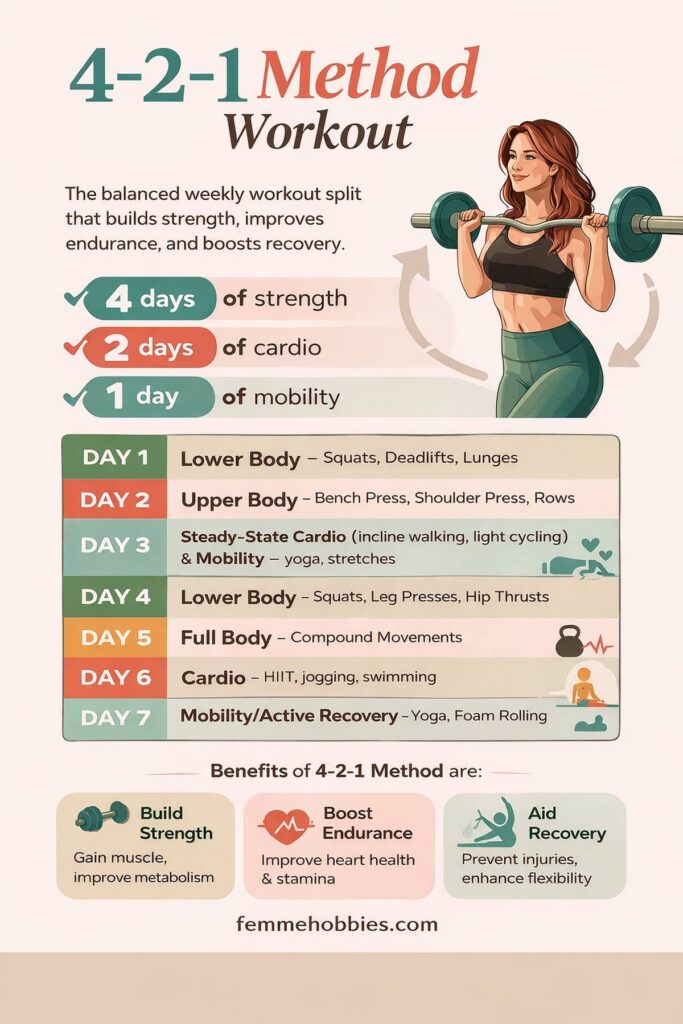
At its core, the 4-2-1 method is a weekly training split designed to provide structure and balance. The numbers refer to the allocation of training days within a single week:
- 4 Days of Strength Training: Focused on building muscle and strength.
- 2 Days of Cardio: Dedicated to improving heart health and endurance.
- 1 Day of Mobility/Active Recovery: Set aside for flexibility, joint health, and mental reset.
Note: You might see the term 4-2-1 used in medical contexts regarding pediatric fluids or even specific fasting protocols. This guide focuses exclusively on the fitness application of the term.
The philosophy here is periodization and balance. Unlike extreme 30-day challenges that leave you exhausted, the 4-2-1 approach is a lifestyle template. It ensures you hit every energy system and muscle group without neglecting the recovery necessary for growth.
Why It Works: The Science and Benefits
This split is effective because it adheres to fundamental principles of exercise physiology. Let’s break down why each component is critical.
Strength: The Foundation (4 Days)
Dedicating four days to resistance training allows for an optimal frequency of hitting muscle groups. Science suggests that for muscle hypertrophy (growth), targeting each major muscle group twice a week is generally superior to the old-school bro split of hitting a body part once a week.
With four days, you can easily split your routine into Upper/Lower or Push/Pull sessions. This frequency stimulates protein synthesis more often, leading to better strength gains, increased bone density, and a higher resting metabolic rate.
Cardio: The Engine (2 Days)
Cardio often gets a bad rap in the lifting community, but it is essential for a complete athlete. The 4-2-1 method encourages a mix of modalities:
- Zone 2 Cardio (LISS): Low-Intensity Steady State cardio, like a brisk walk or light cycle, builds your aerobic base and improves fat adaptation without taxing your central nervous system.
- HIIT: High-Intensity Interval Training can be used for calorie burn and VO2 max improvement, though it requires more recovery.
Properly programmed cardio improves capillary density, meaning your body becomes more efficient at delivering oxygen to working muscles, which actually helps you lift more weight during strength days.
Mobility: The Longevity Factor (1 Day)
This is the day most people skip, yet it is arguably the most important for longevity. Mobility is not just stretching; it is the ability to move a joint through its full range of motion with control.
Dedicating a full day to active recovery and mobility helps with injury prevention, reduces stiffness, and ensures your joints remain healthy enough to handle the intensity of the other six days. It also lowers cortisol levels, allowing your body to switch from a sympathetic (fight or flight) to a parasympathetic (rest and digest) state.
Building Your 4-2-1 Week: Sample Routines
The beauty of the 4-2-1 method is its flexibility. You can plug in different exercises depending on your equipment access and goals. Here are three ways to structure your week.
Option A: The Upper/Lower Split (Recommended)
This is the gold standard for intermediate lifters. It ensures every muscle is worked twice a week with adequate rest in between.
- Monday (Upper Strength): Bench Press (3×8), Bent-Over Rows (3×10), Overhead Press (3×10), Bicep Curls (3×12), Triceps Dips (3×12).
- Tuesday (Lower Strength): Squats (3×6), Romanian Deadlifts (3×10), Lunges (3×12), Calf Raises (3×15).
- Wednesday (Zone 2 Cardio): 45 minutes of brisk walking, incline treadmill, or light cycling. Keep your heart rate at a conversational pace.
- Thursday (Upper Hypertrophy): Pull-ups (3xAMRAP), Incline Dumbbell Press (3×10), Lateral Raises (3×15), Face Pulls (3×15).
- Friday (Lower Hypertrophy): Leg Press (3×12), Leg Curls (3×12), Goblet Squats (3×12), Glute Bridges (3×15).
- Saturday (Cardio – Choice): A fun activity like hiking, swimming, or a 20-minute HIIT session.
- Sunday (Mobility): 30 minutes of yoga flow, foam rolling tight areas (quads/lats), and dynamic stretching.
Option B: The Push/Pull/Legs + Full Body
If you prefer categorizing movements by function, this split works well.
- Day 1: Push (Chest, Shoulders, Triceps)
- Day 2: Pull (Back, Biceps, Rear Delts)
- Day 3: Legs (Quads, Hamstrings, Glutes)
- Day 4: Cardio
- Day 5: Full Body Composite (Compound movements only)
- Day 6: Cardio
- Day 7: Mobility
Option C: The 4-2-1 Workout Method at Home.
You don’t need a gym membership to see results. Here is a plan requiring only dumbbells.
- Strength Days: Focus on Dumbbell Goblet Squats, DB RDLs, Pushups, DB Rows, and Overhead Press. Use progressive overload by increasing reps or slowing down the tempo (time under tension) since you can’t easily add weight.
- Cardio Days: Jump rope, burpees, or a jog around the neighborhood.
- Mobility Day: Follow a YouTube yoga instructor or focus on hip- and thoracic-spine openers.
Critical Considerations
While this method is highly effective, it is also demanding. Six days of activity is a lot for the average person.
Who It’s Best For
The 4 2 1 method workout is ideal for intermediate exercisers who already have a base level of fitness and are looking for more structure. If you have been training inconsistently for a year or two, this is the perfect framework to level up.
Adaptations for Beginners
If you are new to fitness, jumping straight into six days a week is a recipe for burnout. Start slow.
- Phase 1 (Weeks 1-4): 2 Strength, 2 Cardio, 3 Rest Days.
- Phase 2 (Weeks 5-8): 3 Strength, 2 Cardio, 2 Rest Days.
- Phase 3: Full 4-2-1 method.
Managing Intensity & Burnout
Watch out for signs of overtraining: extreme fatigue that sleep doesn’t fix, a sudden drop in strength, or irritability. If you feel this, take an extra rest day. You can also extend the week to 9 or 10 days. For example, do two strength days, take a rest day, do two more strength days, take a rest day, then do your cardio.
Nutrition Note
You can’t out-train a bad diet. While “4-2-1 method eating” isn’t a strict protocol, supporting this volume of training requires adequate fuel. Prioritize protein for muscle repair (Many active individuals aim for higher protein intake to support recovery, though individual needs vary.
Final Verdict
The 4-2-1 method works because it forces you to stop neglecting the things you aren’t good at. Strength athletes are forced to do cardio; runners are forced to build strength.
It is an excellent, evidence-based template for balanced fitness. However, the most effective routine is always the one you can adhere to consistently. If four days of strength training feels like a chore, scale it back. But if you are ready to commit to a routine that covers all your bases, this is it.
Pick one of the sample routines above, listen to your body, and start your first 4-2-1 cycle this week.