
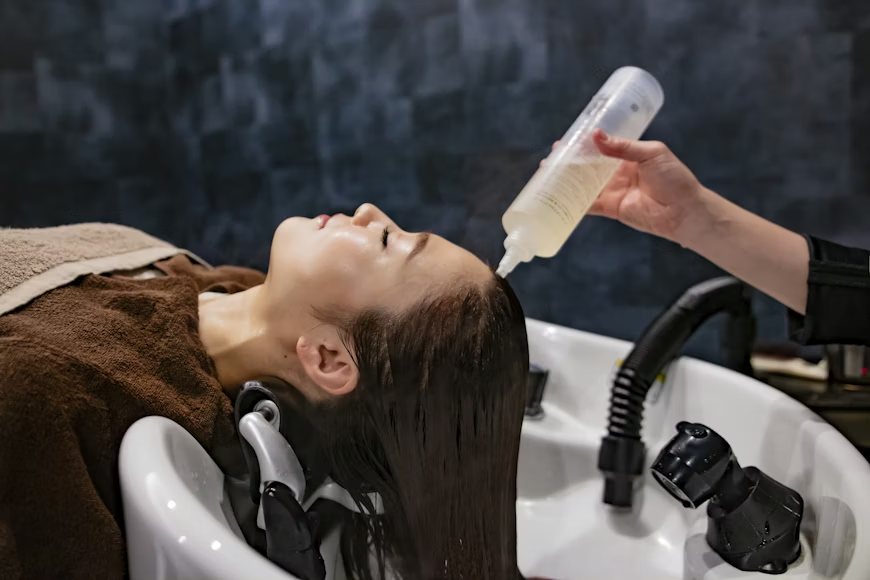
The oil cleansing method for hair is taking over TikTok, but is it real science or just another fleeting trend? You have likely seen the videos: influencers massaging oil into their scalps, claiming it cured their dandruff, accelerated growth, and transformed their strands. But before you raid your kitchen pantry for olive oil, you need to understand the mechanism behind the method.
Whether you want more shine, less product buildup, or a healthier scalp, the results depend entirely on execution. Do it wrong, and you’ll end up with a greasy, matted mess. Do it right, and it could change your hair health forever.
I tested this method for 60 days on three different hair types, interviewed a trichologist, and analyzed the chemistry so you don’t have to guess. Here is exactly how to do it step by step, product by product, and hair type by hair type.
What Is the Oil Cleansing Method for Hair?
At its core, the oil cleansing method for hair works on a simple chemical principle: like dissolves like.
Your scalp produces sebum, natural oils, and is often coated in silicone-based styling products. Water repels these substances. However, the oil you apply during this method binds to the oxidized sebum, stubborn product buildup, and hard water minerals that regular, gentle shampoos often leave behind.
Most tutorials miss a crucial detail: It’s not just about adding oil to your head. It is about emulsification. This is the process of turning that oil into a milky substance with water so it rinses clean, taking the dirt and debris with it.
Oil Cleansing vs. Traditional Hair Oiling
It is easy to confuse this method with traditional hair oiling (often associated with Ayurveda), but the goals are different.
- Traditional Oiling: Focuses on nourishment and conditioning. It is often left on overnight and applied heavily to the ends.
- Oil Cleansing: Focuses on deep cleaning and scalp health. It is applied to the scalp and lengths for only 10–30 minutes before a shower and requires a specific double-cleanse removal process.
The Science: Why Oil Actually Cleans Hair
If you have an oily scalp, adding more oil seems counterintuitive. However, the chemistry suggests otherwise. Your scalp produces sebum—a complex mixture of wax esters, oils, and dead skin cells. When you mix that with dry shampoo and styling sprays, you get a biofilm, a sticky layer that water alone cannot penetrate.
Trichologists often compare oil cleansing to cleaning a paintbrush. If you have used oil-based paint, water alone won’t remove it. You need fresh oil to dissolve the old oil before soap and water can rinse everything away.
This same principle applies to your scalp. Oil helps break down oxidized sebum and stubborn product buildup so shampoo can properly wash it away.
Here is the microscopic process of a successful oil cleanse:
- Application: The fresh carrier oil penetrates the biofilm and bonds with the oxidized sebum on your scalp.
- Massage: Mechanical action helps break up the debris clinging to your hair follicles.
- Emulsification: When water touches the oil, it loosens the bond between the oil and your hair.
- Removal: The shampoo washes away the oil, which is now carrying the dissolved dirt with it.
The Complete Step-by-Step Guide
Ready to try it? You will need a carrier oil (your base), a gentle shampoo (sulfate-free is usually best to avoid over-stripping), and 20–40 minutes of free time.
Step 1: Choose Your Oil Blend
Using the wrong oil is the fastest way to fail. Choose based on your primary hair concern.
- Dry scalp or flakes: Jojoba oil. It closely mimics human sebum.
- Oily scalp and buildup: Grapeseed oil. It is light and non-comedogenic.
- Damaged or brittle hair: Argan oil. High in Vitamin E and fatty acids.
- Fine, limp hair: Apricot kernel oil. Ultralight and won’t weigh hair down.
- Thick, coarse hair: Castor oil. Thick and deeply conditioning (best used in a blend).
Optional Essential Oil Add-ins:
For every 2oz of carrier oil, you can add roughly 5 drops of essential oil for targeted benefits. Tea tree is excellent for dandruff, rosemary is praised for stimulating circulation, and lavender creates a soothing spa-like scent.
Step 2: Application Technique
Start with dry hair. This is non-negotiable. If your hair is wet, the water will create a barrier, preventing the oil from binding to the dirt.
Section your hair to ensure you are reaching the scalp, not just the top layer of hair. Apply the oil to your scalp and massage for 3–5 minutes. Use the pads of your fingertips, not your nails, as scratching can cause micro-abrasions and infection.
Once the scalp is covered, pull the remaining oil through the lengths of your hair.
The Wait:
- Fine hair: 10 minutes.
- Thick/Coarse hair: Up to 30 minutes.
- Caution: Do not leave this on overnight unless you know your hair loves heavy moisture. For cleansing purposes, 30 minutes is the upper limit.
Step 3: The Double Cleanse (Crucial Step)
This is where the magic happens.
- First Wash: Apply shampoo to your oiled hair. Add just a splash of water and scrub to emulsify. The mixture should turn milky. Rinse. This removes about 80% of the oil and dissolved debris.
- Second Wash: Shampoo normally. This final wash actually cleans your strands now that the barrier is gone.
Pro tip: If your hair feels greasy after drying, you likely didn’t emulsify enough, or you skipped the second wash.
Step 4: Condition
Listen to your hair. Fine hair types may find they don’t need conditioner after an oil cleanse. Curly and thick textures will likely still need to be conditioned on the mid-lengths and ends.
Tailoring the Method to Your Hair Type
One size does not fit all in hair care. Here is how to tweak the routine for your specific texture.
For Fine, Straight Hair
You are at the highest risk of the grease factor. Stick to ultralight oils like apricot kernel or grapeseed. Limit your frequency to once a week maximum, and don’t leave the oil on for longer than 15 minutes.
For Curly Hair (3a-4c)
Your hair likely craves moisture. You can use heavier blends containing argan or avocado oil. Feel free to leave the oil on for up to 60 minutes, perhaps using a heat cap to aid penetration. This method is fantastic for curly hair as it helps remove product buildup that dulls curl patterns.
For Oily Scalps
It feels scary, but oil cleansing can help balance sebum production. Use Jojoba or Grapeseed oil. These oils can signal to your scalp that it has enough moisture, potentially slowing down excess oil production over time.
For Color-Treated Hair
Be careful with the wait time. While oils are generally safe, leaving them on too long can sometimes loosen color molecules. Stick to 15–20 minutes and avoid using harsh clarifying shampoos for the removal step.
Who Should NOT Try This Method
Let’s be honest: this method isn’t for everyone. You should proceed with caution or skip this entirely if:
- You have extremely limp hair: If your hair looks greasy six hours after washing, even light oils might be too heavy.
- You have scalp psoriasis or open sores: The mechanical action of massaging can irritate sensitive conditions, and oil can trap bacteria in open wounds. Consult a dermatologist first.
- You are prone to folliculitis: Some people experience scalp acne when using oils. Always patch test.
- You are impatient: This is a 30-minute process. If you want a 2-minute shower solution, this isn’t it.
7 Mistakes That Ruin Oil Cleansing
If you tried this and hated it, you probably committed one of these common errors:
- Using Coconut Oil: For many people, coconut oil is comedogenic (pore-clogging) and difficult to rinse out.
- Skipping Emulsification: If you don’t add water and work the oil into a lather before rinsing, the oil stays on your head.
- Single Shampooing: One wash is rarely enough to remove the oil and the dirt it has trapped.
- Scrubbing Too Hard: Aggressive scrubbing damages the scalp.
- Overdoing It: Daily oil cleansing will result in limp, stringy hair. Stick to 1–2 times a week.
- Applying to Wet Hair: Remember, water repels oil.
- Quitting Too Soon: It may take your hair 2–3 sessions to adjust to this new method.
The 30-Day Experiment: What to Expect
Having tested this for two months, here is the realistic timeline of results.
- Week 1: Your hair feels different. Not necessarily bad, just different. You might experience some static or heaviness as the old silicone buildup releases.
- Week 2: The scalp feels cleaner for longer periods. You might find yourself reaching for dry shampoo less often.
- Week 3: A noticeable difference in shine appears. Products absorb better because they aren’t fighting through layers of biofilm.
- Week 4: You have found your rhythm. You know exactly how much oil to use and how long to leave it on.
As one Reddit user, hairstruggles, noted: I tried oil cleansing and woke up with a greasy mess. Turns out I used coconut oil on my fine hair way too heavily. Switched to jojoba and now I am obsessed.
Is It Worth It?
The oil cleansing method for hair isn’t a miracle cure that will fix every hair woe overnight. But for those struggling with scalp imbalance, dryness, or stubborn buildup that regular shampoo can’t touch, it is a game-changer.
The key is matching the oil to your hair type and respecting the double cleanse. Use the wrong oil, and you will hate it. Use the right one, and you will wonder why you waited so long to start.
Your hair will tell you what it needs—you just have to listen.
Frequently Asked Questions
Technically, yes, but it is not recommended. Facial oils often contain emulsifiers specific to skin makeup removal, and are significantly more expensive per ounce. You are better off using a hair-specific product or a pure carrier oil.
Oil cleansing does not directly cause hair growth. However, a healthy scalp that is free of clogged follicles creates a better environment for growth. Oils like rosemary and castor also have properties that support circulation and strength.
A “pre-poo” (pre-shampoo treatment) is usually about protecting the hair strands from the stripping effects of shampoo. Oil cleansing is specifically about cleaning the scalp and removing buildup. They use similar products but have different goals and techniques.
This involves applying the oil to dry hair but skipping the 20-minute wait time, jumping straight to the shower. It is less effective for deep cleaning but fine for maintenance.