
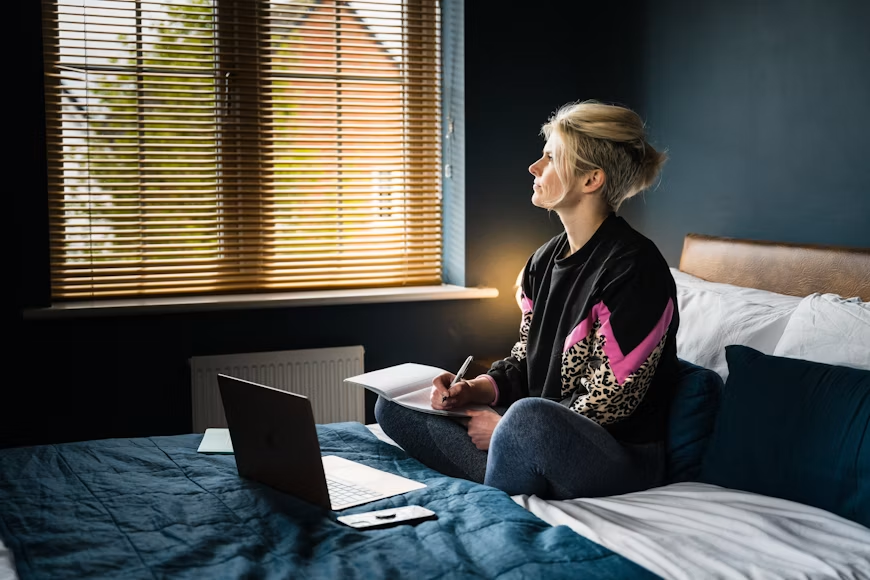
Soft productivity is a mindset shift that prioritizes intention over output, rest as a prerequisite for performance, and energy-matched work over clock-watching. Research supports it—a 2025 Nature Human Behaviour study found that reducing performative busywork lowers burnout and improves results. Women are leading this cultural shift, and it’s changing how we define success.
The girlboss era sold women a specific dream: wake up at 5 a.m., run a company, raise children, maintain a social life, and do it all with a green smoothie in hand and a smile on your face. Exhaustion wasn’t a warning sign. It was proof you were serious.
Then something snapped.
The cultural hangover from hustle culture is real, and it’s showing up in the way women are quietly—but decisively—rewriting the rules around work, ambition, and rest. Soft productivity is the name for what’s emerging in its place: a gentler, more sustainable approach to achieving meaningful results without burning yourself to the ground in the process.
This matters right now because burnout isn’t just a personal problem. It’s a systemic one, and women carry a disproportionate share of the load. When research starts confirming what many already feel—that doing less, more intentionally, actually produces better outcomes—it’s worth paying attention.
This post breaks down exactly what soft productivity means, why women are leading the shift, what the science says, and seven practical habits to start practicing it today.
What Is Soft Productivity, Really?
Soft productivity is a mindset shift, not a method. There’s no app to download or rigid framework to follow. At its core, it’s about replacing the obsession with output with something more sustainable: intention.
The principles are simple. Intention matters more than quantity. Rest is a prerequisite for good work, not a reward you earn after it. And the energy you bring to a task shapes the quality of that task—so matching your work to your natural rhythms isn’t laziness, it’s strategy.
In practice, soft productivity looks like choosing three high-impact tasks over a chaotic to-do list of thirty. It looks like taking an actual lunch break, protecting your evenings, and releasing the guilt that follows when you don’t squeeze every possible minute for productivity.
One thing it is not: quiet quitting. Soft productivity isn’t anti-ambition, and it isn’t about coasting. People who practice it are often deeply committed to their work—they have just stopped confusing busyness with progress.
Why Women Are Leading This Shift
The concept of soft productivity didn’t emerge in a vacuum. It grew directly out of the burnout that followed the have it all era—a cultural moment that placed enormous pressure on women to perform flawlessly across every domain of life simultaneously.
The invisible load is a real and well-documented phenomenon. Household administration, childcare logistics, emotional labor, social coordination—much of this falls disproportionately on women, and it rarely shows up in any productivity metric. When you’re already managing a second unpaid job outside of work hours, optimizing your morning routine and taking on stretch assignments starts to feel less inspiring and more crushing.
The girlboss aesthetic collapsed partly under the weight of its own contradiction. It celebrated female ambition while demanding that women prove themselves by working harder than everyone else—and still look effortless doing it.
Soft productivity feels like relief rather than rebellion because it finally permits women to be human. To have limits. To rest without apologizing.
What Does the Research Actually Say About Doing Less?
The shift toward soft productivity isn’t just a cultural feeling—the data backs it up.
A 2025 study published in Nature Human Behaviour examined the impact of a four-day work week across 3,000 employees. The findings were significant: participants reported reduced burnout, improved physical health, and higher work ability—a measure of how capable someone feels to do their job well. Crucially, productivity didn’t decline.
A UK-based trial produced similarly compelling results. According to that research, 71% of participants reported reduced burnout and 39% experienced less stress after switching to a shorter working week. Company revenues held steady throughout the trial period.
The takeaway is straightforward: performative busyness—filling hours to look productive—doesn’t produce better results. Focused, intentional effort does. Soft productivity isn’t a feel-good trend. The evidence suggests it’s simply a more effective way to work.
7 Habits for Practicing Soft Productivity
Habit 1: Add 3 Things to Your To-Do List, Not 30
A long to-do list feels productive. It rarely is. Each morning, identify two or three tasks that will genuinely move the needle—your non-negotiables for the day. Everything else becomes optional. This forces prioritization and creates a realistic picture of what’s actually achievable, which means fewer days ending in frustration and more ending in a sense of real accomplishment.
Habit 2: Work With Your Energy, Not Against It
Not all hours are equal. Most people have a peak window of two to four hours where their focus and cognition are sharpest. Identify yours and protect it for deep work—writing, strategizing, solving complex problems. Save administrative tasks, emails, and low-stakes meetings for the natural slumps. Energy management, not time management, is the real lever for sustained high performance.
Habit 3: Build in Real Rest—Not Productive Rest
Scrolling social media between tasks is not rest. Neither is listening to a podcast while doing chores or checking emails during lunch. Genuine rest looks like a short walk without headphones, a nap, a cup of coffee enjoyed without a screen, or simply sitting quietly. These restorative breaks replenish cognitive resources and reduce decision fatigue. Skipping them doesn’t save time—it costs focus.
Habit 4: Protect Your Boundaries Like a Deadline
Most people treat their end-of-workday the way they treat guidelines: loosely. Soft productivity asks you to treat logging off as non-negotiable—the same way you’d treat a client deadline or a doctor’s appointment. Set a clear stopping time and hold it. The emails will still be there in the morning. Your nervous system will thank you for the break.
Habit 5: Cut the Busywork Ruthlessly
Audit your calendar with a critical eye. How many recurring meetings could be an email? How many tasks exist purely because they’ve always existed? Eliminating low-value activities isn’t laziness—it’s clarity. Performative productivity (looking busy) and actual productivity (making progress) are not the same thing. Soft productivity insists on the distinction.
Habit 6: Let Good Enough Be Good Enough
Perfectionism is one of the most effective forms of self-sabotage. It slows execution, stalls decisions, and drains energy that could go toward something that matters more. Soft productivity isn’t about lowering your standards—it’s about applying your highest effort strategically. Save your A-game for the work that truly warrants it. Let the rest be good enough and done.
Habit 7: Stop Measuring Your Worth in Output
This is the deepest habit and the hardest one. The belief that your value is tied to how much you produce is baked into hustle culture at a foundational level. Soft productivity challenges it directly: your worth isn’t your daily output. Releasing the compulsion to do more for the sake of doing more creates space for better work, clearer thinking, and a life that feels sustainable rather than relentless.
How Soft Productivity Connects to Intentional Living
Soft productivity doesn’t clock out when your laptop closes. The same principles—intention, energy-matching, releasing perfectionism—apply to how you spend your personal time.
Hobbies play a specific role here. Activities pursued for pleasure rather than performance replenish creativity and restore perspective in ways that passive scrolling simply doesn’t. Painting, hiking, baking, reading fiction—these aren’t distractions from meaningful work. Research consistently shows that creative hobbies improve cognitive flexibility and problem-solving, which means they actively make you better at your job.
The that girl aesthetic—structured mornings, intentional evenings, activities done with care—resonates partly because it frames rest and personal rituals as worthy of time. Soft productivity aligns with that instinct. Living intentionally and working sustainably aren’t in tension. They reinforce each other.
Soft Productivity vs. Traditional Productivity
| Soft Productivity | Traditional Productivity | |
| Focus | Intention over output | Output over everything |
| Rest | Rest is a prerequisite | Rest is a reward |
| Work style | Energy-matched | Clock-watching |
| Standards | Good enough where appropriate | Perfection is the goal |
| Worth | Defined by impact | Defined by hours worked |
Start With One Habit This Week
Soft productivity isn’t a rejection of ambition. It’s a smarter expression of it. The research is clear: reducing performative busyness, building in genuine rest, and working with focused intention produces better outcomes—not worse ones. Women are leading this shift because they’ve felt the cost of the alternative most acutely, and they’re choosing something more sustainable.
You don’t need to overhaul your entire approach overnight. Choose one habit from this list and practice it consistently this week. Notice what shifts. That’s where it starts—small, intentional, and entirely on your own terms.
Ready to build a life that feels as good as it looks? Explore more intentional living and hobby ideas for women at femmehobbies.com
Frequently Asked Questions
No. Soft productivity is about doing meaningful work with full intention and appropriate energy, rather than filling hours to appear busy. Laziness avoids effort. Soft productivity directs effort more precisely toward what actually matters.
Yes, though it requires deliberate boundary-setting. You may not control your workload, but you can control how you prioritize within it, when you take real breaks, and how you protect your energy. Start with the habits you can apply today, regardless of your role.
Pick one habit from this list and practice it for a week. The three-task to-do list is the easiest entry point. Reducing your daily list forces immediate prioritization and quickly demonstrates that doing less—with focus—outperforms doing everything, poorly.
You don’t need to name it. Focus on outcomes: you’re protecting your most focused hours for high-impact work, managing your energy to maintain quality, and reducing time spent on low-value tasks. The results speak clearly enough without the terminology.