
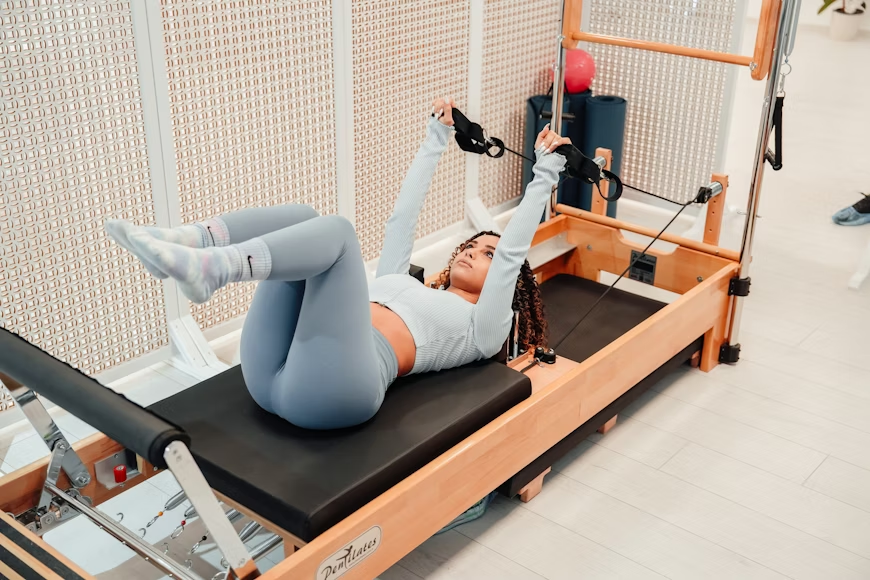
You see the shakes on TikTok and hear the cult-like praise, but what are the real Solidcore results after 1 month? As someone who committed to multiple classes a week, I won’t promise you instant abs. Instead, here’s an honest breakdown of the strength gains, the subtle toning, the mental shift, and the real cost so you can decide if these notoriously hard classes are worth it for you.
If you have spent any time scrolling through fitness content recently, you have likely encountered the blue lights and the loud music associated with Solidcore. It markets itself as pilates redefined, but many users describe it as 50 minutes of controlled torture. The workout utilizes slow, deliberate movements on a resistance-based machine to push muscles to failure.
But beyond the intense marketing and the sweat-drenched selfies, does it actually work? Can you really transform your body in 30 days? Here is everything you need to know about the physical and mental changes you can expect, broken down week by week.
This article is based on my personal experience and publicly shared user feedback. I am not affiliated with Solidcore.
What I Actually Noticed: My Solidcore Results Timeline (Week-by-Week)

It is easy to get discouraged when you don’t see changes in the mirror after a week of hard work. However, [solidcore] results happen in stages. Here is a realistic timeline of what the process looks like, moving from the initial shock to tangible strength.
After 1-2 Classes: The Good Burn
Your first class is going to be humbling. The movements are slow, but the intensity is high. Almost immediately, you will experience the famous Solidcore shakes. This trembling isn’t weakness; it is your slow-twitch muscle fibers engaging in a way they likely haven’t before.
Expect significant soreness the next day, the kind where sitting down in a chair feels like a chore. At this stage, you won’t look different, but you will feel an immediate awareness of your core muscles. You are waking up parts of your body that often go dormant during standard cardio or weightlifting sessions.
After 2 Weeks: The Sturdy Feeling
Consistency is key here. If you stick to the recommended frequency of 2-3 classes per week, the two-week mark is where you start to feel sturdier.
While you might not see ripped abs yet, you will notice functional changes. Sitting at a desk feels different because your posture improves naturally. You might notice you are engaging your core while carrying groceries or walking up stairs. This is where the mind-muscle connection clicks. You stop just trying to survive the class and start understanding how to effectively activate the target muscles.
After 1 Month (30 Days): Real Performance Gains
This is the milestone many people search for: solidcore results 1 month in. At the 30-day mark, the visual changes often begin to creep in, but the performance metrics are undeniable.
- Strength: You will need fewer breaks. You might even grab heavier dumbbells or add more spring tension to the machine.
- Endurance: If you are a runner or cyclist, you may notice your other activities feel easier because your stabilizing muscles are stronger
- Visuals: Depending on your starting point and nutrition, this is often when lines or subtle muscle definition appear, particularly in the obliques and shoulders.
The 3-Month+ Reality: Body Recomposition
If you are looking for a complete transformation—what people often call solidcore results before and after you need to look at the three-month horizon. True muscle hypertrophy (growth) takes time. After 90 days of consistent progressive overload, you are looking at significant body recomposition. This is where the physique changes associated with the workout, lean muscle mass, and a sculpted look become truly apparent.
Beyond the Hype: The Pros, Cons & Who Sees Results Fastest
Every workout has its evangelists and its detractors. To give you a fair Solidcore review, we need to look at both the glowing positives and the harsh realities.
The Pros: Functional and Efficient
Invisible Strength: The most underrated benefit is deep core strength. This isn’t just about six-pack abs; it’s about the transverse abdominis (the corset muscle). Strengthening this protects your lower back and improves daily movement.
Low-Impact on Joints: Unlike HIIT classes that involve jumping or heavy pounding on pavement, Solidcore is incredibly low-impact. It is relentless on the muscles but gentle on the knees and ankles, making it sustainable for long-term fitness.
Mental Discipline: There is a unique mental challenge to holding a plank while your body screams at you to drop. Overcoming that urge builds a mental resilience that translates to other areas of life.
The Cons: Cost and Intensity
The Price Tag: This is the biggest barrier. A solidcore membership or class package is an investment. Prices vary by city (New York pricing differs from Nashville pricing), but it is undeniably a premium boutique fitness experience.
It Never Gets Easier: Because the workout relies on spring-based resistance, you are constantly adjusting the load to ensure failure. You never beat the machine. For some, this is motivating; for others, it is exhausting.
Not a Cardio Solution: If you are looking to improve your VO2 max or get a major endorphin rush from cardio, this isn’t it. It is strictly strength and endurance.
Tech Issues: While the workout is great, user reviews often cite frustrations with the booking app or strict late-cancel policies. Transparency is key here; read the fine print on booking windows.
Who Sees Results Fastest?
While everyone is different, certain groups tend to respond quickly to this stimulus:
- Beginners to Strength Training: If you have never lifted weights, the newbie gains here can be dramatic.
- Endurance Athletes: Runners often see rapid improvements in their splits and injury prevention because they finally strengthen their weak hips and glutes.
- Those Seeking Toning: If your goal is muscle definition rather than mass bulk, the high-rep, low-weight nature of the class aligns perfectly with that aesthetic.
Solidcore vs. The Alternatives: Is It Unique?
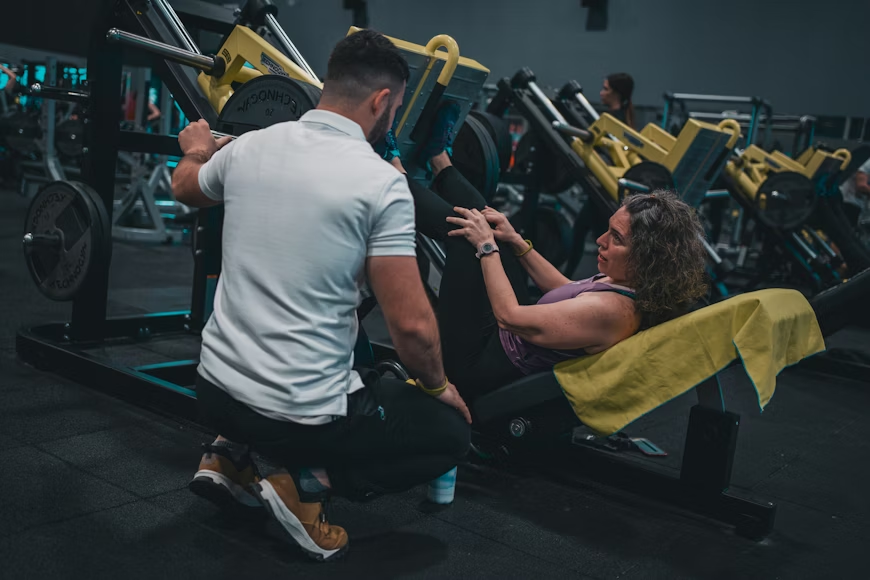
Is Solidcore actually different from the other options out there, or is it just good branding?
Solidcore vs. Traditional Pilates
This is the most common confusion. Traditional Pilates focuses heavily on breath work, flexibility, and flow. Solidcore is much louder, heavier, and faster-paced (though the movements are slow). It focuses on muscle failure and resistance. If you want a zen experience, go to Pilates. If you want to shake, go to Solidcore.
Solidcore vs. HIIT (OrangeTheory, Barry’s)
HIIT workouts rely on explosive movements to spike your heart rate. Solidcore keeps the heart rate relatively steady but spikes muscular tension. They are actually great complements to each other. Solidcore builds the strength; HIIT handles the cardio.
Solidcore vs. Heavy Weight Lifting
Solidcore builds muscular endurance (how long a muscle can work), while heavy lifting builds muscular strength (how much force a muscle can exert). You won’t get the same bulk from Solidcore that you would from a squat rack, but you will get unparalleled stability.
Your Starter Guide: Maximizing Results & Saving Money
Ready to try it out? Here is how to navigate your first experience without breaking the bank or your ego.
Finding a Studio and Booking
Search for Solidcore near me to find your local studio. Most major cities have multiple locations. When looking at the schedule, pay attention to the class type.
Your First Class: Do not let your ego drive. Book a Starter50 or Foundation50 class. These sessions move more slowly, and the coach breaks down the machine names and safety cues. Even if you are fit, the machine learning curve is steep. Arrive 15 minutes early so the coach can give you a personalized machine tour.
Saving Money on Classes
Because the SolidCore cost is high, look for introductory offers.
- First Class Deals: Many studios offer a solidcore first class free promo or a heavily discounted drop-in rate for locals.
- Intro Month: Look for a New Client Special, often priced around $99-150 for unlimited classes for two weeks or a month. This is the best way to test the Solidcore results 30-day timeline yourself.
- Student/Teacher/Military: If you fall into these categories, ask the front desk about specific discounts on packages.
Can You Do It At Home?
While the brand focuses on in-studio experiences, the principles of time-under-tension can be replicated at home with sliders and dumbbells. However, replicating the specific resistance of the machine is difficult without the equipment.
Final Verdict: Is Solidcore Worth It For You?
After a month of shakes, sweat, and soreness, is the membership worth the hype?
It IS worth it if:
- You want to build serious functional strength and core stability.
- You enjoy a coaching style that pushes you past your perceived limits.
- You have the budget for premium fitness and can commit to 2-3 times a week.
It is NOT worth it if:
- Your primary goal is significant weight loss (you need a nutrition and cardio component for this).
- You dislike the sensation of muscle burning or failure.
- You are looking for a relaxing, meditative stretch.
Ultimately, the most significant Solidcore results are often felt, not just seen. It is an investment in a body that is stronger, more resilient, and capable of handling physical challenges with ease.
FAQs on Solidcore Results
Solidcore is exceptional at building the abdominal muscles. However, seeing those muscles (visible abs) depends entirely on your overall body fat percentage. You can have a rock-hard core that is covered by a layer of insulation. To see the abs, you usually need to dial in your nutrition alongside the workouts.
You will feel strength gains within 2-3 weeks (fewer breaks, better form). Visual toning usually takes consistent effort (3x week) for 1 month or more.
It is primarily a muscle-building workout. Muscle tissue burns more calories at rest than fat tissue, so it boosts your metabolism over time. However, for significant weight loss, it should be paired with a cardio routine and a caloric deficit.
Reddit threads often feature extreme opinions—either superfans or people who hated the price. The consensus on Reddit usually aligns with this review: the workout works, but the cost is the main pain point.