
Living with fine hair often feels like a constant battle against gravity. But what if your fine hair isn’t a limitation, but simply a hair type requiring a unique, informed approach? This isn’t just another personal routine; it’s the definitive guide built on expert insights and proven strategies to make your fine hair look fuller, healthier, and more vibrant.
Having fine hair doesn’t mean you are destined for limp, lifeless locks. Many of the most coveted hair looks in the world, from sleek bobs to ethereal waves, are actually best achieved with fine textures. The secret lies in understanding the physics of your strands and customizing your care to work with them, not against them. Whether you are struggling with a lack of volume, grease at the roots, or breakage, this guide covers the science-backed solutions you need.
The Foundation: Understanding Your Fine Hair
Before diving into products, it is crucial to understand what you are working with. There is a common misconception that fine and “thin” are interchangeable terms, but they refer to completely different characteristics.
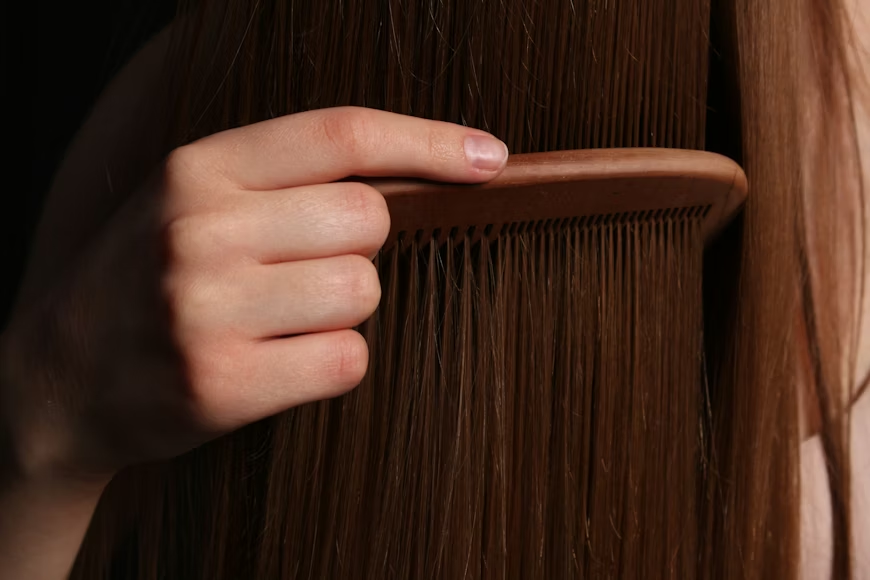
- Fine Hair: This refers to the diameter of the individual strand. If you take a single strand of hair and roll it between your fingers, you might barely feel it. Think of fine hair like a silk thread—delicate and smooth.
- Thin Hair: This refers to the density of hair on your scalp, how many individual follicles you have per square inch.
It is entirely possible to have dense fine hair, meaning you have a lot of hair, but each strand is skinny. Conversely, you can have coarse hair (thick strands) but low density (sparse). Understanding this distinction is vital because products designed for thinning hair often target follicle stimulation, whereas products for fine hair focus on plumping the strand without weighing it down.
| Characteristic | Fine Hair | Thin (Sparse) Hair | Coarse Hair |
| Strand Diameter | Small (like a thread) | Can be small or large | Large (like rope) |
| Touch Test | Hard to feel between fingers | Depends on texture | Rough/distinct feel |
| Primary Goal | Volume and structure | Scalp coverage/regrowth | Moisture and smoothing |
The Fine Hair Care Bible: A Science-Backed Routine
Because the diameter of fine hair is smaller, the cortex (the inner layer providing strength) is less substantial. This makes fine hair more prone to mechanical damage and chemical processing. Here is how to build a routine that protects and enhances your texture.
Washing: The Balance of Power
For fine hair, the scalp is often the enemy of volume. Because your individual strands are smaller, there is less surface area for your natural scalp oils (sebum) to cover. This means fine hair gets greasy faster than coarse hair.
However, you must avoid over-shampooing with harsh surfactants. While sulfates give that squeaky clean feeling, they can strip the cuticle, leading to static and breakage. Look for pH-balanced, volumizing shampoos containing mild cleansers.
The Clarifying Reset: Once a week, use a clarifying shampoo. Fine hair is easily weighed down by mineral buildup from hard water or silicones from styling products. A clarifying wash acts as a reset button, restoring natural bounce.
Conditioning: The Ears Down Rule
Conditioner is non-negotiable for detangling, but application is everything. Apply conditioner strictly from the ears down to the ends. If you apply it near the roots, you are guaranteeing flat hair by noon.
Avoid heavy butters like shea or high concentrations of coconut oil, which can be too heavy. Instead, look for ingredients like Panthenol (Vitamin B5), which penetrates the cuticle to add hydration and creates a film that slightly thickens the strand, or Hydrolyzed Wheat Protein, which strengthens the hair shaft from within.
Drying: Handle with Care
Fine hair is weakest when wet. Rubbing it vigorously with a standard bath towel causes friction that roughens the cuticle, leading to frizz and breakage. Switch to a microfiber towel or an old cotton t-shirt and gently squeeze the water out. This small change can significantly reduce mechanical damage over time.
Styling for Lasting Volume: Tools & Techniques

Achieving volume that lasts longer than an hour requires a mix of thermal styling smarts and product placement.
The Heat Styling Strategy
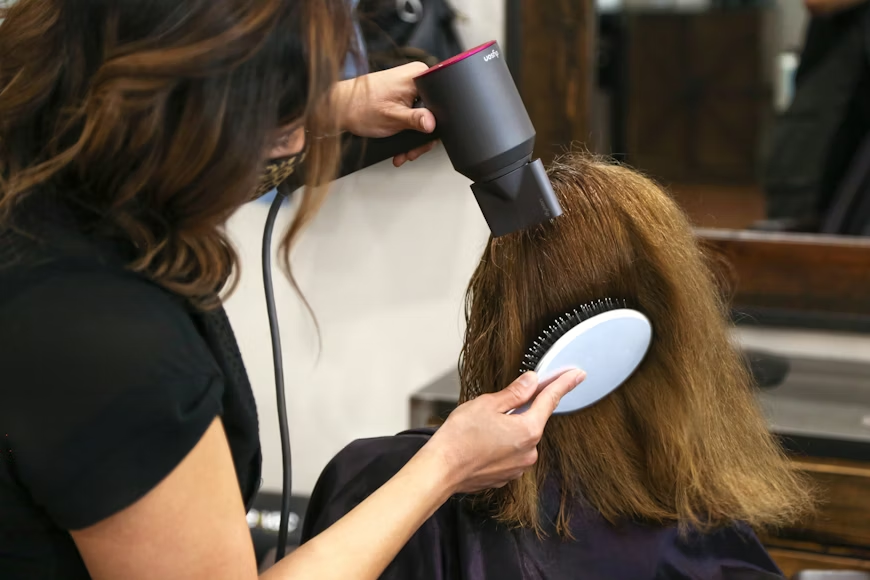
Heat can be damaging, but it is also the best way to change the structure of the hair to create lift. When using a blow dryer, always start by rough drying your hair upside down until it is about 80% dry. This lifts the roots away from the scalp naturally.
To finish, use a thermal round brush (ceramic or metal core). The heat from the dryer heats the brush, acting like a curling iron to smooth the cuticle and set the shape. Crucial Tip: Let the hair cool down on the brush before unwinding it. Hydrogen bonds in the hair reshape with heat but set with cold. If you take the brush out while the hair is hot, the volume will collapse.
Product Application: Location Matters
- Volumizing Mousse: This is a fine hair staple. Apply it to damp hair, focusing specifically on the roots. Mousse adds grit and structure that fine hair naturally lacks.
- Dry Shampoo: Don’t just use this on dirty hair. Apply dry shampoo to clean hair before you go to bed. As your scalp produces oil overnight, the powder absorbs it immediately, preventing morning grease and giving you a head start on volume.
Accessories That Don’t Damage
Avoid rubber bands that can snap delicate strands. Opt for silk scrunchies or seamless hair ties. For updos, claw clips are excellent for fine hair because they distribute tension evenly, preventing the traction alopecia (hair loss from pulling) that tight ponytails can cause.
The Haircut Blueprint: Shapes That Create Illusions
The right cut can simulate thickness. The general rule for fine hair is to keep ends blunt. Feathery, razor-cut ends often make fine hair look ragged and thin.
The Power of the Bob
A blunt bob or a lob (long bob) is often the holy grail for fine hair. By keeping a strong weight line at the bottom, your hair appears instantly thicker. An angled bob, where the hair is slightly shorter in the back and longer in the front, pushes the weight forward and creates a beautiful shape that doesn’t require hours of styling.
Strategic Layers
There is a myth that fine hair shouldn’t have layers. This isn’t entirely true. While you want to avoid heavy layering that removes too much density, internal layers, or ghost layers can be beneficial. These are hidden, shorter pieces cut underneath the top layer of hair to physically prop up the longer strands, creating volume without visible steps.
Bangs and Framing
Curtain bangs or wispy fringe can work beautifully, adding softness around the face. However, avoid heavy, deep-set bangs if you have low density, as this pulls too much hair away from the sides, making the rest of your hair feel thinner.
The Fine Hair Product Arsenal: Curated by Function
Navigating the haircare aisle can be overwhelming. Here is a breakdown of what to look for based on your specific struggles.
For Instant Volume
Look for Root Lift Sprays. Unlike mousse, these have a targeted nozzle to blast the roots with holding polymers.
- Budget Pick: L’Oreal Paris Advanced Hairstyle Boost It
- Splurge: Color Wow Xtra Large Bombshell Volumizer (uses polymer technology to thicken without drying alcohol).
For Damage and Breakage
Fine hair breaks easily. You need protection, but standard oils are often too heavy.
- The Solution: Peptide Leave-Ins. Products like K18 or lightweight bonding oils work on a molecular level. If using an oil, choose one with a high evaporation rate (like Argan or Jojoba) and use literally one drop, warmed in palms and applied only to the ends.
For Grease Control
- The Solution: Dry Shampoos with Rice Starch. Rice starch is lighter than cornstarch and less likely to create a gritty paste on the scalp.
- Top Pick: Batiste Original (classic and effective) or Living Proof Perfect Hair Day (actually cleans the hair rather than just masking oil).
Fine Hair Myths That Hold You Back
Myth: You can never use oil on fine hair.
Truth: You absolutely can, but application is key. Avoid the scalp entirely. Use lightweight oils like grapeseed or squalane, and apply them as a pre-shampoo treatment to protect ends from harsh water, or use a tiny amount on dry ends to seal the cuticle.
Myth: More product equals more hold.
Truth: For fine hair, less is more. Excess product creates weight, and weight kills volume. Start with a pea-sized amount. You can always add more, but you can’t take it away without washing.
Embrace Your Texture
Fine hair is often described as difficult, but it is also silky, soft, and incredibly responsive to styling. It dries quickly, shines brilliantly, and has a natural movement that heavier hair types envy.
The goal isn’t to force your hair to be something it’s not, but to master the art of working with it. Start with one change from our guide, perhaps switching your conditioner application or trying a new styling technique and observe the transformation. Your best hair days are ahead of you.
FAQs
Yes, the diameter of your hair follicle is determined by your genetics. While you cannot permanently change the size of your follicles to grow coarse hair, you can maximize the potential of the hair you have through diet, scalp health, and thickening products that coat the strand.
Fine hair in men requires similar care. Matte pomades or styling clays are better than gels, which clump strands together and expose the scalp. Keep the sides shorter to create the illusion of more volume on top.