

Anyone with textured hair knows the unique anxiety of sitting in a stylist’s chair. You watch the wet strands fall to the floor, stomach tightening, wondering if you’ll leave looking like a rock star or a triangle. A bad haircut isn’t just an inconvenience; when it comes to curly hair cuts, it can set your hair journey back by months.But a great cut? It’s nothing short of transformative, unlocking volume, definition, and confidence you didn’t know you had.
This guide isn’t just a list of tips or a gallery of pretty pictures. It is a comprehensive system designed to help you diagnose exactly what your curls need, communicate effectively with professionals, and maintain your results long after you leave the salon.
Compiled from consultations with master curly hair specialists, barbers, and textured-hair educators, this guide translates professional insights into your actionable plan. Whether you have loose waves or tight coils, you are about to become the expert on your own hair.
Part 1: The Foundation – Understanding the Curly Hair Cut Philosophy
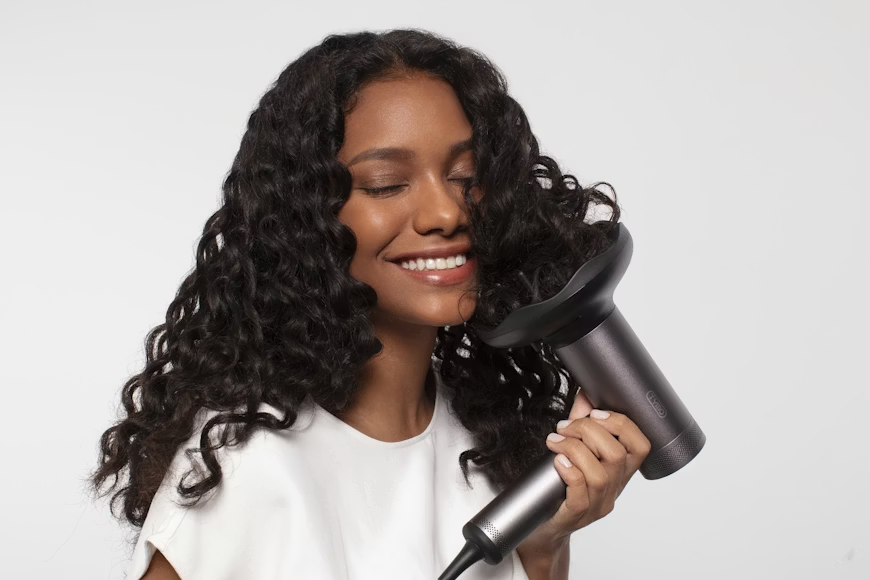
The biggest mistake most people make is assuming a haircut is just a haircut. For straight hair, precision often relies on wet strands pulled taut. For textured hair, this approach is a recipe for disaster.
What Makes a Curly Cut Unique?
The gold standard for textured hair is almost always the dry cut. Why? Because curls are shape-shifters. Their behavior changes drastically when wet versus dry.
Wet hair is heavy and elongated. If a stylist cuts your hair while it’s wet and pulled straight, they are guessing where that curl will land once it dries and springs back up. This shrinkage factor varies from person to person and even from one section of your head to another. Dry cutting respects the natural curl pattern, allowing the stylist to sculpt the shape in real-time. Techniques like the DevaCut, Ouidad Carve & Slice, or the Rezo Cut all have different methodologies, but they share this core principle: work with the hair as it lives.
Finding Your Starting Point: Cuts for Your Curl Family

Understanding your curl type is the first step in asking for what you need.
- Type 2 (Wavy): The goal here is usually encouraging definition without weighing the waves down. Haircuts for semi curly hair, male clients, or women with 2A-2C waves often benefit from light layering to stop the hair from lying flat against the head.
- Type 3 (Curly): These curls have a distinct S or corkscrew shape. Cuts should focus on reducing bulk without destroying the curl clumps. Curly haircuts for women in this category often lean toward rounded shapes or shags that distribute volume evenly.
- Type 4 (Coily/Kinky): These textures can range from tight coils to Z-patterns. The focus is often on structure and silhouette.
Men and Short Styles:
When looking for curly haircuts for men or short curly haircuts for haircutsmen, the conversation shifts to barbering versus salon techniques. A standard barber might use clippers, which can sometimes frizz out the ends of curls. A scissor-over-comb technique or dry cutting often yields a better, more natural finish that grows out smoothly.
Kids:
Curly haircuts for kids, curly haircuts for girls, and curly haircuts for boys require a gentler approach. The priority here is low-maintenance styles that don’t require hours of styling. Managing fear is also key to finding a stylist who is patient and explains the process can make the difference between a traumatic memory and a fun outing.
Part 2: The Blueprint – Choosing Your Perfect Style
Once you understand the philosophy, it’s time to choose your shape. Length isn’t just about inches; it’s about the silhouette you want to create.
The Length Decision Matrix
- Curly hair cuts short: Short styles like pixies, bobs, or tapered cuts are bold and define the face. They are perfect for Type 3C and 4A curls, as the shorter length removes weight and allows the curls to spring up and show their true shape.
- Pros: High impact, quick drying time.
- Cons: Frequent trims are needed to maintain the shape.
- Medium length curly hair cuts men & women: This is the sweet spot, long enough to tie back but short enough to maintain volume. Shoulder-length cuts are incredibly versatile and work across almost all texture types.
- Curly hair cuts long: Long hair maximizes romance and drama. However, length equals weight. If you want curly haircuts long but still crave volume, you absolutely need layers. Without them, you risk the dreaded “pyramid” shape where the top is flat, and the bottom is wide.
Feature-Specific Style Guides
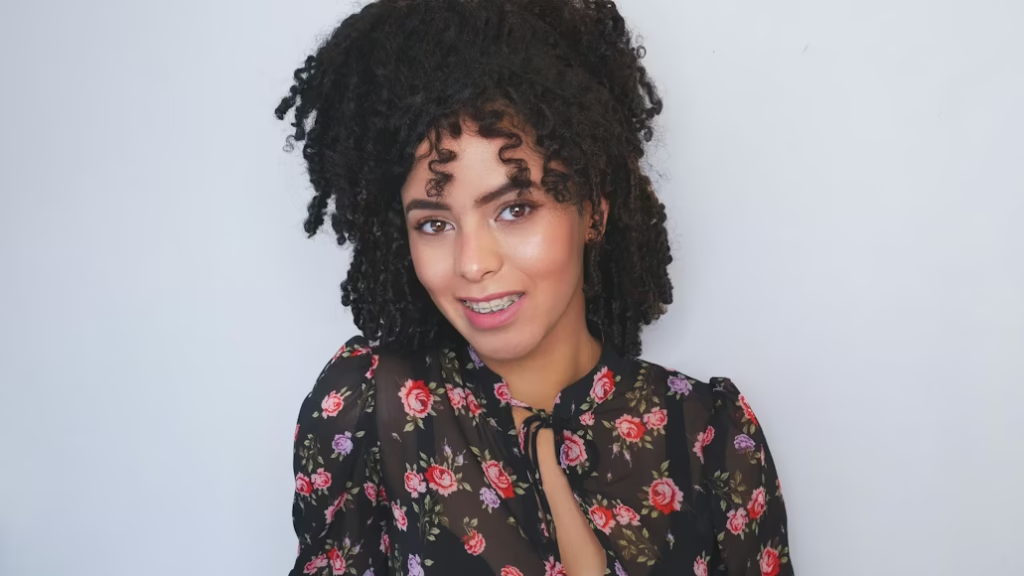
The details are where a good cut becomes a great one.
Layer Logic:
Layers are tools. For wavy hair, layers remove weight to encourage the wave to spring up. For coily hair, layers are used to create a shape (like a halo or heart shape) rather than just for volume.
Bang Confidence:
Yes, curly girls can wear bangs! Curly hair cuts and styles with curtain bangs, face-framing tendrils are incredibly popular right now because they soften the look and grow out easily. For the brave, micro bangs on coily hair make a stunning, high-fashion statement.
Color & Cut Synergy:
Your cut and color should work together. When planning curly hair cuts and color, consider a pintura, or hand-painted highlight technique. A shag cut works beautifully with balayage because the layers expose the different dimensions of the color.
Part 3: The Execution – Your Pre-Visit Action Plan
You know, now you need a partner. Finding the right stylist is the most critical step in this entire process.
The Find Your Stylist Decoder Ring
Step 1: The Search
Don’t just walk into the nearest salon. Use databases from certification bodies (like DevaCurl, Rezo, or Ouidad) to find trained professionals. On Instagram, search specifically for hashtags like #[YourCity]CurlySpecialist or #[YourCity]NaturalHair to see real results.
Step 2: The Vetting
Read a stylist’s portfolio with a critical eye. Look for consistency. Do they only post one curl type? If you have 4C hair and its feed is entirely 2B waves, keep looking. You want to see before and after that looks like your texture.
Step 3: The Consultation Script
When you sit in the chair, or even when you book, ask these questions:
- Do you cut hair wet or dry?
- What is your experience with my specific curl pattern?
- How do you handle shrinkage when determining length?
The Inspiration Toolkit
Visuals are a universal language. Create a mood board with 2-3 pictures. One should show the shape you like, one should have a texture similar to yours, and one should highlight a specific detail you love (like the bangs or the taper). This triangulation helps the stylist understand exactly what you’re aiming for.
Part 4: The Location Hack – Navigating Curly Hair Cuts Near Me
Cracking the Code for Local Specialists
Finding a specialist requires digging deeper than a generic Google search for curly haircuts near me, curly haircuts austin, or curly hair cuts atlanta.
Geographic Keyword Module:
If you were searching in a specific hub like Austin, you’d find that the curly hair scene thrives on South Congress and in East Austin salons. You would look for specialists trained in dry-cutting techniques, with many offering in-depth consultations to assess your hair’s needs from fine waves in Hyde Park to thick coils in Clarksville. Apply this logic to your city: look for neighborhoods known for arts and culture, as they often harbor creative stylists who specialize in texture.
Proximity vs. Quality
Here is the hard truth: it is better to drive an hour for a certified specialist than five minutes for a competent generalist. Your hair grows slowly; a bad cut lasts a long time. Treat the haircut as a specialist appointment, not an errand.
The At-Home Alternative
Curly haircuts at home are a controversial topic. If you must trim your own hair, do so with extreme caution. Invest in professional-grade shears (never kitchen scissors). Only trim dusting amounts literally the very tips of the curls hair by hair, while it is dry. This is maintenance, not restyling. If you want a shape change, put the scissors down and book an appointment.
Part 5: The Maintenance Manual – Keeping Your Cut Perfect
How Often? A Personalized Schedule
Maintenance depends on your goals. Haircuts for semi curly hair, male styles, or short pixie cuts often need trims every 4-6 weeks to keep the neckline clean and the shape crisp. Conversely, curly haircuts for women with 3C or 4C hair who are growing out length might only need a structural reshape every 3-4 months, focusing on health and hydration in between.
Styling to Enhance Your Cut
Your cut provides the structure; products provide the finish. A short curly cut for men might just need a light curl cream or leave-in conditioner to look polished. However, a long, layered cut on Type 3 hair often needs a strong-hold gel to ensure the definition lasts all day and doesn’t turn into a frizzy halo.
2026 Trends Preview
Looking ahead to curly haircuts 2026, the trend is moving away from rigid, trademarked cutting systems and toward hyper-personalization. We are seeing more intuitive cutting, where stylists mix techniques, perhaps dry cutting the perimeter for length but wet cutting the interior for moisture retention to create a bespoke shape that fits your lifestyle, not just a trend.
Empowering Your Curl Journey
You now have the map—from understanding your curls to executing the salon visit. Remember, a phenomenal curly haircut is a collaboration. You bring the knowledge of your hair’s story, and a great stylist brings the technical skill. Use this guide to become an informed partner in the process.
Ready to transform your curls? Start by analyzing your curl pattern. Then, tell us in the comments: which cut from our guide are you most excited to try—the bold short look or the versatile medium length?
FAQs
The best haircut for curly hair depends on your curl type, density, and lifestyle. In general, dry-cut curly haircuts with layered shaping work best because they respect natural curl patterns and reduce shrinkage surprises. A great curly hair cut enhances volume without creating frizz or bulk.
Most professionals agree that curly hair should be cut dry. Cutting curls in their natural, dry state allows the stylist to see how each curl falls and behaves, reducing the risk of uneven length caused by shrinkage after washing.
Curly hair usually needs a trim every 8–12 weeks, depending on the style. Short curly haircuts and men’s curly styles may need more frequent maintenance, while long curly hair cuts can go longer between trims if the shape is balanced.
Yes, layers are essential for most curly haircuts. Proper layering removes excess weight, enhances curl definition, and prevents the “triangle” shape. The key is curl-specific layering, which differs from straight-hair techniques.
You can lightly trim curly hair at home for maintenance, but full curly haircuts should be done by a trained professional. If trimming at home, only cut dry curls, use professional shears, and remove very small amounts to avoid uneven results.